

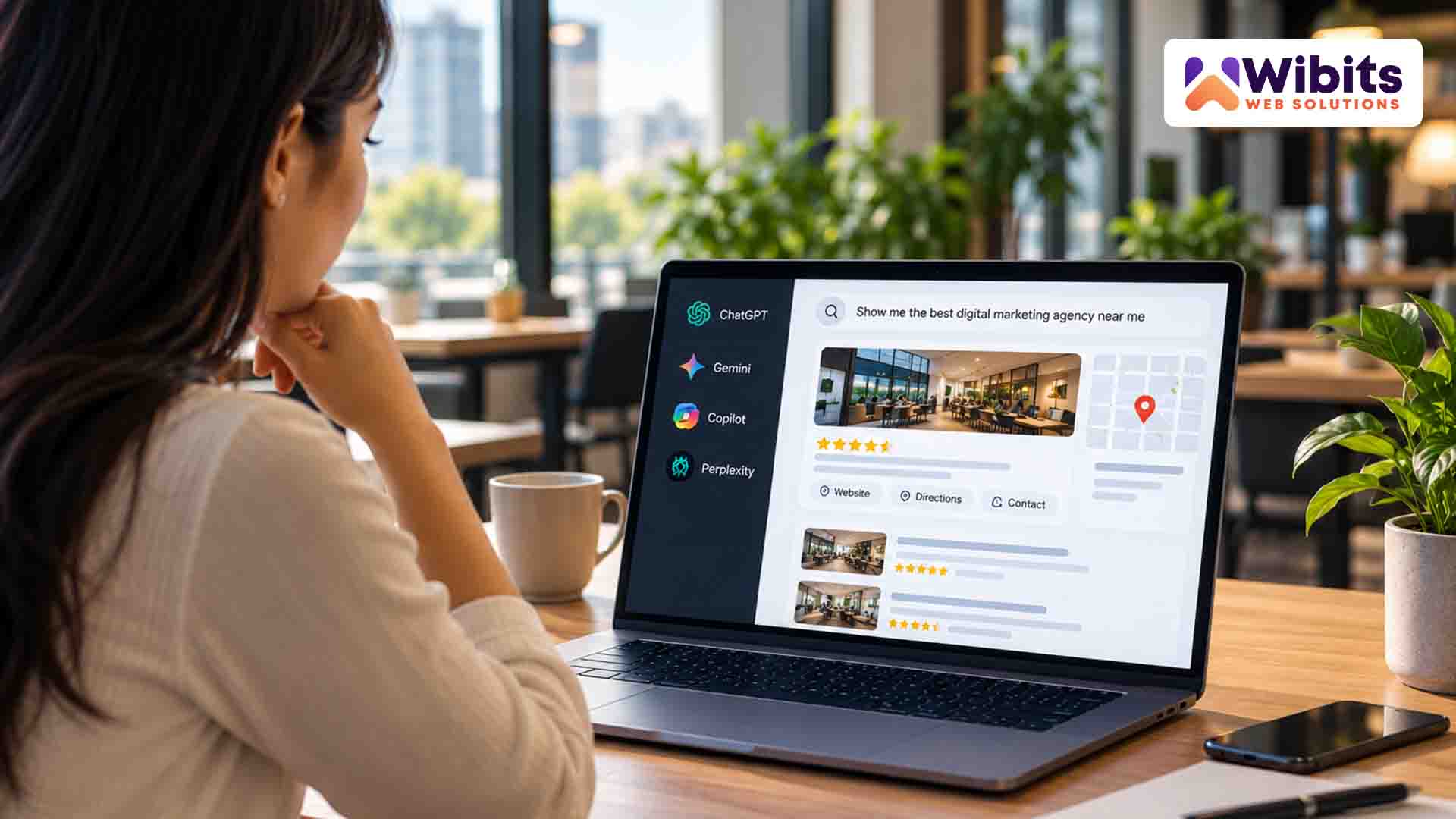
Black Friday is on November 27, and a growing share of shoppers will start their search in ChatGPT, Google AI Mode or Gemini instead of a page of blue links. Adobe forecasts that clicks from AI services to US retail sites will rise 130% this holiday season, with the biggest jumps on Thanksgiving, Black Friday and Cyber Monday. If an assistant cannot read your products, prices and stock, it cannot recommend you. This guide explains how AI shopping assistants choose products and what to fix before the sales weekend.
Adobe’s 2026 holiday forecast expects US online spending of $275.1 billion between November 1 and December 31, up 6.7% on last year. Within that, it projects AI-referred traffic to retail sites to rise 130%, with Thanksgiving up 159%, Black Friday up 95% and Cyber Monday up 88%.
Two cautions keep that number in perspective. Adobe counts AI traffic as shoppers who click a link from an AI service, and it has not published AI’s share of total visits, so a large percentage can sit on a small base. Even so, Adobe’s analysis of September 2026 traffic found AI-referred visitors converting better than other visitors, and Adobe expects that revenue-per-visit advantage to widen over the holidays. In its survey of 5,000 shoppers, 77% of those who had used AI for shopping said it made them more confident in their purchase.
The practical point: these visitors arrive with a shortlist already made. Being on that shortlist is the new first page of results.
The landscape changed a lot this year, so avoid planning around last year’s headlines.
| Platform | What shoppers can do | What it means for your store |
|---|---|---|
| ChatGPT | Research products and compare options. OpenAI scaled back in-chat Instant Checkout in March 2026 and now sends buyers to the retailer’s own checkout. | Your product data and your mobile checkout speed both affect results. See Forrester’s analysis. |
| Google AI Mode and Gemini | Browse, compare and, in the US, use Universal Cart, which launched on October 15, 2026. | Needs accurate Google Merchant Center data. Native checkout also needs UCP set up. See Search Engine Roundtable’s report. |
| Microsoft Copilot | Shopping answers and checkout for participating merchants. | Bing visibility and a Microsoft Merchant Center feed into Copilot results. |
| Perplexity | Search, compare and buy inside its answer engine. | Allow its search crawler and confirm merchant programme terms directly. |
If you sell on Shopify, check your admin’s agentic sales channel settings, because Shopify has been syndicating catalogs to several of these assistants. Merchant coverage and rollout stages change often, so confirm what is live for your store rather than assuming.
No one outside these companies knows the exact weighting, but their public guidance points the same way:
Google states in its guide to AI features and your website that there are no extra requirements to appear in AI Overviews or AI Mode, and no special AI files or schema to add. Pages simply need to be indexed and eligible to show a snippet.
| When | Action |
|---|---|
| Now to Nov 20 | Audit robots.txt, CDN and firewall rules. Fix feed errors. Check the top 100 products. |
| By Nov 24 | Make your last crawler or bot-rule change. Schedule all sale prices. |
| Nov 26 to 30 | Check daily for price mismatches, stock errors and crawler problems. |
| From Dec 1 | Compare results with last year. Review core update impact once Google has finished its rollout. |
Create a custom channel group in Google Analytics 4 for AI referrers such as chatgpt.com, perplexity, copilot and Gemini, and compare it with the same period last year. In Google Search Console, AI Overviews and AI Mode clicks are counted within web search performance. Some agentic checkouts do not fire standard analytics tags, so reconcile your analytics with actual order data. Our AI search optimization services include setting up this kind of tracking alongside visibility audits.
If you also serve customers in specific areas, local SEO adds visibility that does not depend on any single assistant.
How much will AI drive Black Friday 2026 traffic?
Adobe forecasts AI-referred traffic to US retail sites to rise 130% year over year this season. It is a growth rate, and Adobe has not published AI’s total share of visits, so treat it as fast growth from a modest base.
Do I need special schema or an AI file to appear in Google AI Mode?
No. Google says there are no extra requirements. Your pages must be indexed and eligible for snippets, and your structured data should match the visible content.
Can shoppers buy directly inside ChatGPT?
OpenAI scaled back Instant Checkout in March 2026. Purchases now generally complete on the retailer’s own site or app, so your checkout experience matters.
Which crawler should I allow for ChatGPT?
OAI-SearchBot controls ChatGPT search visibility. GPTBot is for model training and is a separate decision.
Is it too late to prepare?
No. Crawler access, feed accuracy and price scheduling can all be checked in a few days. Save major redesigns for after Cyber Monday.
Does the Google core update affect AI shopping visibility?
Indirectly. Both reward helpful, accurate, well-structured pages, so improving content quality supports both. Read our core update guide for how to audit after the rollout.
AI shopping assistants are becoming a real route to your store, and Black Friday is the first peak where that matters. You do not need exotic tactics. Keep your crawlers open, your feeds and prices accurate, your pages clear and your mobile checkout fast. Do the basics now, measure against your own baseline, and refine in December. To audit your store for AI search readiness, see our case studies or talk to our team. For more guides like this, visit the Wibits digital marketing blog.

Black Friday is on November 27, and a growing share of shoppers will start their…
Search no longer ends at ten blue links. Your customers now ask Google, ChatGPT, Gemini…
Google began rolling out the November 2026 core update on November 10, 2026. It is…
Let's say you own a digital marketing company in Nagercoil. Your website is doing reasonably…
Google has a new system called SAFE, and it has caught the attention of people…
Think about the last time you searched for something online. Most of the time, you…
The internet search methods have changed. Now rather than accessing tens of sites one would…
A small business already has plenty on its plate. Then it has to compete online…
A potential customer opens ChatGPT and asks, “Who are the best companies for SEO in…

For years, website owners have focused on one big question: Can Google find my website?…